
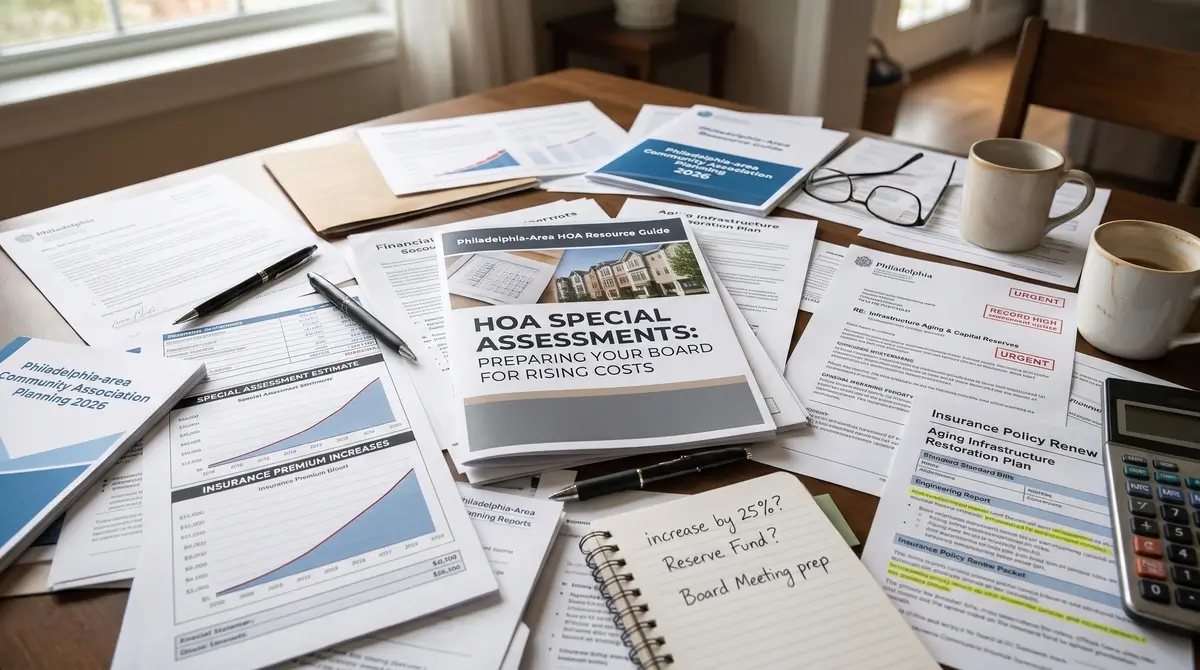
Board members who check reserve studies for Philadelphia associations are often surprised by how far the numbers have drifted from reality. A special assessment used to be a rare, one-off expense. Now it’s closer to a regular budget item, and the reasons behind that shift aren’t unique to any one community.
Rising insurance costs, aging infrastructure, and reserve funds that haven’t kept pace with real repair prices are converging at once. Philadelphia’s mix of older housing stock and harsh winter weather only adds to the pressure. Here’s what’s driving this trend and what your board can do to stay ahead of it.
Key Takeaways
- The national median special assessment reached a record $1,100 per door in 2025, touching more than 75 million Americans in HOA communities.
- Reserve schedules written years ago haven’t been adjusted for today’s insurance and construction costs, leaving many associations quietly underfunded.
- Deferred maintenance on aging systems turns a manageable repair into an expensive emergency almost every time.
- Transparent, consistent financial reporting determines whether homeowners trust an assessment or fight it.
- Boards that prepare early with updated bids and clear communication shrink both the size and the shock of an assessment.
Has Your Reserve Fund Fallen Behind What Repairs Actually Cost?
For most associations, the honest answer is yes. Reserve schedules were set years before insurance premiums and material costs climbed this high, and few boards have gone back to update them. We see this constantly with communities that assumed their reserve fund was healthy simply because the balance looked steady on paper.
A few signs usually show up before the gap becomes obvious:
- The reserve study is more than five years old, or was never updated after a major repair.
- Dues have stayed flat for several budget cycles despite rising vendor quotes.
- A “funded” percentage in the reserve study doesn’t match current replacement costs for the roof, elevator, or paving.
According to Forbes, the national median special assessment hit a record $1,100 per door in 2025, a figure that reflects how widespread this underfunding has become.
Insurance Premiums Keep Climbing Nationwide, and Philadelphia Isn’t Exempt
Insurance is one of the clearest forces pushing assessments higher everywhere, not just in storm-prone states. Master policies covering shared structures, elevators, and common areas are renewing at sharply higher rates across the country.
Florida shows how extreme this can get. Homeowners there now pay an average of $2,691 a year in premiums, up nearly 50 percent since 2020. Pennsylvania associations aren’t facing identical numbers, but carriers everywhere are pricing in more risk, and that trend reaches older Philadelphia-area buildings too. When a renewal lands well above budget, a board is usually left choosing between a steep dues hike or a special assessment to cover the difference.
Where Does Financial Reporting Usually Break Down First?
It tends to break down quietly, long before anyone notices a shortfall. Homeowners build trust through itemized, consistent reporting, not a single update at the annual meeting, and once that trust erodes, every future financial decision gets harder to explain.
A few warning signs tend to appear before a funding gap turns into a surprise bill:
- Monthly financial statements arrive late or get skipped for a cycle or two.
- Reserve balances get mentioned verbally in meetings but never show up in writing.
- Vendor invoices surface that nobody budgeted for months earlier.
Boardroom financial report challenges don’t disappear once the numbers are presented. They tend to resurface at the exact moment a board needs homeowner buy-in for an assessment vote.
What Happened When One Board Waited Too Long on a Known Repair
A mid-sized association outside the city offers a clear example of how this plays out. Its reserve study flagged an aging stormwater system three years in a row, but the board kept dues flat each cycle to avoid pushback. The board president at the time felt residents weren’t ready for another increase, so the repair kept getting pushed back.
A hard winter storm season overwhelmed the system, flooding common areas and several units. The eventual repair bill came in well above what a planned project would have cost, and the board was left with one option: a special assessment of several thousand dollars per household, due within 60 days. Routine compliance inspections would likely have caught the warning signs years earlier, while the fix was still affordable.
Why Does Rigid Rule Enforcement Make Assessments Harder to Accept?
Because homeowners who already feel shut out of decisions rarely extend a board the benefit of the doubt once a large bill arrives. Associations that enforce rules without much explanation tend to face the strongest pushback when an assessment notice goes out.
Rigid rule enforcement tension points tend to resurface in predictable ways during a vote. A homeowner may question the math even when it’s accurate, bring up an unrelated rule dispute from months earlier, or simply delay payment out of frustration. He or she might not say it outright, but that frustration is almost always rooted in feeling unheard long before the assessment showed up.
What Can a Board Do Before the Next Assessment Vote?
Preparation matters more than the dollar amount itself. A few steps consistently reduce both the size and the shock of an assessment:
- Pull the current reserve study and compare it against actual account balances.
- Get updated bids on the project instead of relying on older estimates.
- Review delinquency rates, since unpaid dues often widen the shortfall.
- Share the full reasoning with homeowners well before the vote happens.
Board members handling this without outside support can also lean on board member resources for guidance on structuring the process and communicating it clearly to residents.
FAQs about HOA Special Assessments in Philadelphia, PA
How much advance notice should homeowners expect before a special assessment is due?
Pennsylvania law and most governing documents require written notice before the board votes, usually 14 to 30 days depending on the CC&Rs, giving residents time to review the amount and deadline.
Can a board approve a smaller assessment without a full community vote?
Many governing documents allow the board to approve limited assessments on its own, often capped at a percentage of the annual budget, while larger amounts typically require homeowner approval.
What should someone review before buying into an HOA with a pending assessment?
They should review the reserve study, recent meeting minutes, and current financial statements, since these documents reveal whether more assessments are likely and who is responsible for the current one.
Why would a board levy a second assessment after homeowners already paid one?
A second assessment usually means the original project cost more than estimated, a new issue surfaced mid-repair, or the reserve fund still can’t cover a separate expense that came up around the same time.
What options exist for a homeowner facing financial hardship from an assessment?
They can ask the board about payment plans, review the CC&Rs for hardship provisions, or request an itemized breakdown, since many associations allow installments instead of a lump sum.
Putting Your Board in a Stronger Position
Special assessments are becoming a routine part of HOA life nationwide, and Philadelphia-area boards are feeling that pressure through rising insurance costs and aging infrastructure. None of this means a board is powerless. Accurate reserve funding, honest communication, and steady reporting all reduce how often assessments happen and how large they need to be when they do.
At Property Management International Greater Philadelphia, we help local boards build the financial clarity that makes these decisions easier to explain and easier for residents to accept. If your board wants a clearer view of where community funds are going, request clearer financial reporting and get ahead of the next funding gap before it becomes your homeowners’ next unwelcome bill.
